Yogyakarta: Where Solo Travelers Find the Soul of Java
Every country has a place where its culture is stored. For Indonesia, that place is Yogyakarta. While Jakarta accelerated and Bali internationalized, Yogyakarta — 'Jogja' to everyone who loves it — kept its sultan, its palace, its artists, and its unhurried soul. It remains the only region in Indonesia still governed by a royal house, and you feel that continuity in the streets: batik workshops beside espresso bars, gamelan drifting out of the kraton walls, students sketching in silver-smithing alleys.
For the solo traveler, Jogja is close to ideal. It is compact, safe, endlessly walkable, and dense with encounters that simply do not happen when you move in a group.
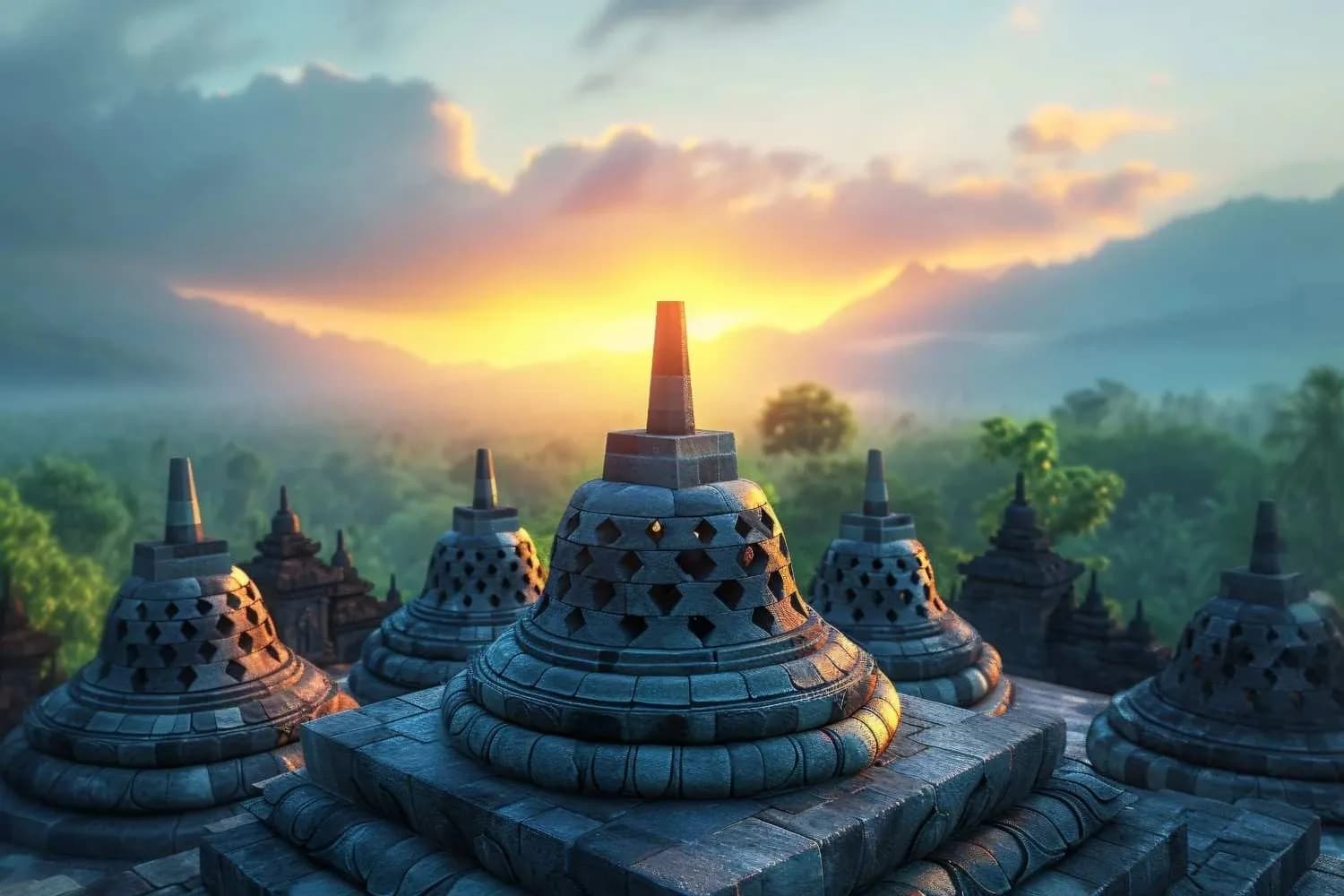
Dawn at Borobudur
An hour northwest of the city stands Borobudur, the largest Buddhist temple in the world — nine stacked platforms, more than two thousand relief panels, hundreds of Buddha statues, built in the ninth century and then lost to volcanic ash and jungle for centuries. Arriving at dawn, when the Kedu Plain is still wrapped in mist and the volcanoes Merapi and Merbabu emerge on the horizon, is one of the great travel moments in Asia.
Alone, the experience changes. Without conversation to fill the silence, the temple does what it was built to do twelve hundred years ago: it slows you down, level by level, until the noise in your head goes quiet. Solo travelers consistently tell us this is the moment their journey actually begins.
A Living Court, Not a Museum
Back in the city, the Kraton — the Sultan's palace — is not a preserved relic but a functioning royal household, with daily performances of court dance and gamelan performed by musicians whose families have held the role for generations. A short ride east, the Hindu temple complex of Prambanan rises in slender volcanic-stone towers, telling the Ramayana in carved relief. Between the two, you can trace a thousand years of Javanese civilization in a single day.
And then there is the food: gudeg simmered overnight in clay pots, sate klathak grilled over coals on bicycle-spoke skewers, coffee culture as serious as anywhere in Melbourne. Eating alone in Jogja is never lonely — a shared bench at a lesehan street mat is an invitation to conversation.
The Voyago Approach
Our Yogyakarta journeys are built around access, not checklists: the right hour at Borobudur, artisans who open their workshops because we have known them for years, and evenings designed for reflection rather than exhaustion. You travel independently, but the doors are already open when you arrive. This is Java at its deepest — and it is best discovered alone.